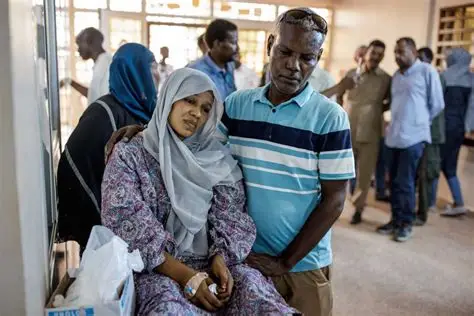
Nearly 3,000 people have fled Yemen for Djibouti in less than a week as escalating violence drives growing displacement within the country and across its borders, the UN refugee agency said Friday.
“Refugees continue to arrive by boat through Obock, Khor Angar, Moulhoule and Godoria after difficult journeys in small vessels,” UNHCR representative in Djibouti Sandrine Desamours told reporters in Geneva.
More than half of those crossing the Bab el-Mandeb Strait are women and children, while some families have been displaced for a second time after previously fleeing Yemen during the 2015 crisis and later returning.
UNHCR is preparing for at least 10,000 new arrivals but warned that capacity is rapidly diminishing. Markazi refugee village, designed for 5,000 people, was already hosting more than 2,700 Yemenis and 1,500 Eritreans.
More than 100,000 people have also been displaced inside Yemen as fighting intensifies, particularly along the western coast, Desamours said.
Health system strained
Meanwhile, only 60% of 5,415 assessed health facilities in Yemen are fully functioning, WHO spokesperson Tarik Jasarevic told reporters in Geneva on Friday.
Only 6% provide a full package of trauma care, despite growing emergency needs.
More than 18,000 suspected measles cases and 106 deaths have been reported this year, alongside 390 diphtheria cases and 13 deaths.
Around 30,000 children experience severe acute malnutrition with complications annually, while some therapeutic feeding centers are operating at 120% bed capacity, he said.
According to the spokesperson, access remains particularly difficult in northern Yemen, where UN operations have been suspended in 90 priority districts.
To date, Jasarevic said, only $490,000 has been secured through WHO’s Contingency Fund for Emergencies (CFE), leaving a “significant funding gap to sustain and scale up the required health response.”