


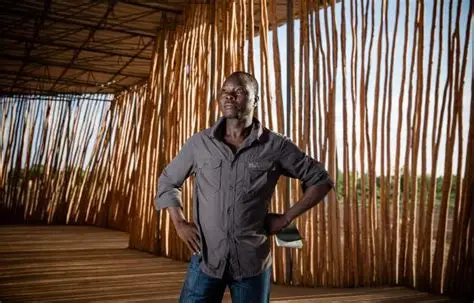
In Dakar, a new cultural center by the Goethe-Institut is drawing attention—not for flashy design, but for how naturally it fits its environment. The building was designed by Francis Kéré, the first African winner of the prestigious Pritzker Architecture Prize.
A Building That Breathes
Instead of relying on heavy air conditioning, the center uses passive cooling—meaning it stays comfortable by design rather than machines. Built with local clay bricks and arranged around a courtyard with a large baobab tree, the structure allows air to flow naturally through perforated walls.
This approach reflects Kéré’s core philosophy: architecture should work with the climate, not against it. His use of local materials isn’t just aesthetic—it reduces costs, energy use, and environmental impact.
From a Village to the World
Kéré’s journey began in his home village of Gando in Burkina Faso, where he built a primary school using local clay and community labor. That project gained international recognition and set the tone for his career.
Today, his work spans continents—from Africa to Europe and even projects in cities like Las Vegas and Rio de Janeiro. Yet, his guiding principles remain the same: simplicity, sustainability, and respect for local context.
Rethinking “Modern” Materials
Kéré challenges the idea that glass and concrete are the only “modern” building materials. He argues that traditional materials like earth and clay can be just as effective—if not more so—especially in hot climates.
He believes that cities can adopt these bioclimatic techniques on a larger scale, reducing energy consumption and adapting better to environmental challenges.
A Global Vision, Rooted in Africa
Even as his international reputation grows, Kéré remains focused on Africa. He continues to explore how architecture can improve daily life—offering not just shelter, but comfort, identity, and sustainability.
In simple terms, this project in Dakar is more than a building—it’s a model for how future cities might be designed: smarter, greener, and more connected to their surroundings.
Source: Newstimehub


