


In the Chopi communities in Mozambique, music and dance are not complete without an instrument called Timbila. It is a heritage that UNESCO recognizes as an intangible Cultural Heritage of Humanity since 2008.
The Chopi communities live mainly in the southern part of Inhambane province in southern Mozambique and are famous for their orchestra music.
The timbila are finely manufactured and tuned wooden instruments made from the highly resonant wood of the slow-growing mwenje (sneezewort) tree.
Under each wooden slat, a resonator made out of calabashes is fastened, tightly sealed with beeswax, and tempered with the oil from a tree called the nkuso fruit, hence giving the timbila that rich sound and unique vibrations.
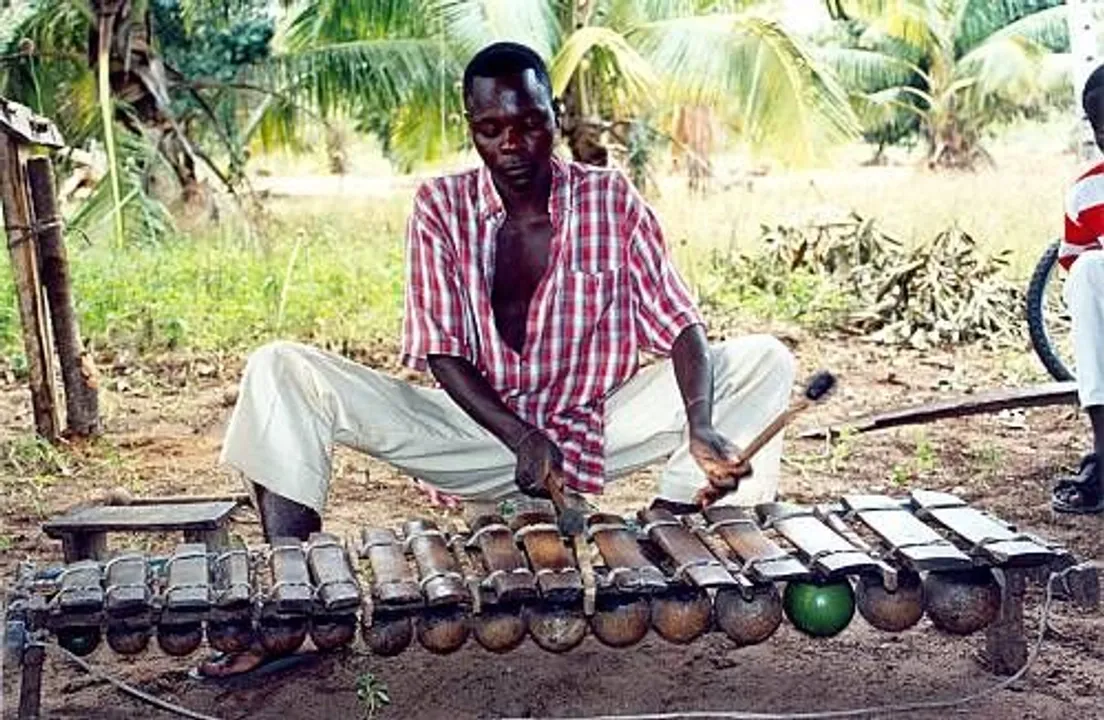
Their orchestras consist of five to thirty wooden xylophones, of this instrument called timbila, of varying sizes and ranges of pitch.
The orchestras are composed of timbila masters and apprentices of all age groups, often with children playing next to their grandfathers.
Each year, several new pieces are composed and performed at weddings and other community events.
The rhythms within each theme are complex, so that the player’s left hand is often executing a different rhythm from that of the right hand.
Lasting about one hour, performances feature solo and orchestra themes, using varying tempi.
Most experienced timbila performers are now old.
Although several timbila masters have started to train young musicians and have also included girls in their orchestras and dance groups, UNESCO is concerned that young people are increasingly losing contact with this cultural heritage to modernity.
The timbila serves as a form of oral history and social commentary, and it survived periods of suppression during Portuguese colonial rule.


